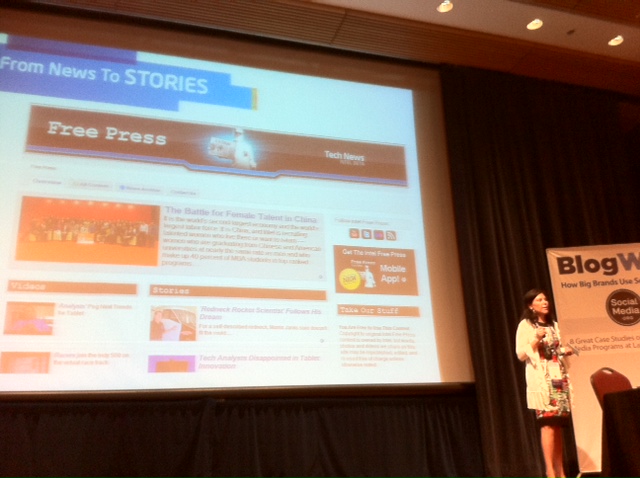
– Posted using MobyPicture.com
Meeting Modern Day Da Vinci, Designer of Smart Spider Robot
Via Scoop.it – Movin’ Ahead
It’s “A Bug’s Life” meets “WALL-E,” except this other-worldly creation is no product of Pixar Animation. It’s the real deal.
Show original

Above is the introduction for story I produced for Intel Free Press. What started out as a short story assignment quickly evolved into a more personal and technical expose of wonderful young engineering student from the University of Arizona, Matt Bunting.
After connecting with Intel Embedded team’s Stewart Christie, I learned that Bunting’s hexapod was appearing on the cover of the Linux Journal and that EE Times was honoring Bunting for prestigious ACES Award, naming him Student of the Year. That’s what brought him to San Jose, where I got to meet him and his mom, who actually helped me while I was shooting the video interview with her son. She even prompted some chuckles and emotional responses from her son while the camera was roling.
The video evolved over a few days of editing, as Christie and Bunting helped me collect photos and video that helped put visuals to Bunting’s words. The story took an artisit turn — blending art and science — when Bunting saw a piano at the Fairmont Hotel, and calmly sat down and dropped into a moody melody that I used at the beginning of the video. That music, mixed with the Spanish guitar music Bunting shared with me, along with sounds from the motor movements of the robot, infused some chilling excitement into the video, a feeling that many people get when they see the hexapod live for the first time.
What an inspiring and kind person. I let Bunting know that my son was moved by the hexapod story so much that now my son wants to be a robot maker. Bunting replied, “It is always wonderful to hear when I have inspired a young mind.”
Now I’m hooked! I’m cheering for Bunting and his University of Arizona research team as they build the Cheetah Project, funded by DARPA, which is an attempt to build a robot that can run as fast as a real four-legged cheetah and eventually a create the world’s fastest two-legged robot.
Here are some photos on Flickr I took with my Canon Rebel X and others collected from Bunting and Christie.
Film315 Stirs Talk About the Touch Generation
A great photo of a toddler thumbing a Blackberry put in context with a personal anecdote expands on the Intel Free Press story, “The Touch Generation,” which explores how many parents today are sharing with their young children touchscreen smartphones and tablets, often making people marvel at how tech savvy these tikes seem as they dive right in these devices like they know what they’re doing.
This post by Film315 sparked a handful of people to weigh in with their take, some concerns and some interesting observations.
User Experience Takes Center Stage at TechFest
Via Scoop.it – Intel Free Press
PORTLAND, Ore.—There were more 1,000 of them from all over the world; Intel researchers and scientists chatting and sharing knowledge and information about transistors, systems, software, validation, voltage, augmented reality, power—and perhaps…
Show original
Tech Tips from 5 Mothers Who Know Best

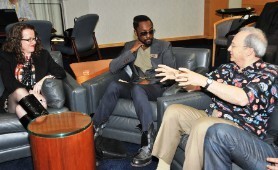
For Mother’s Day this year, I spent some time reaching out to five tech savvy mothers I have followed on Twitter or have known for many years through my work at Intel.
I asked @ClassyMommy @Selfishmom @Techmama @BWorley @ManicMommies why mothers know best about tech in their household and what was on their Mother’s Day gift wish list. Each shared some awesome quotes in this story, “Mothers Know Best About Tech.”
Happy #MothersDay!
Related articles
- Little or No-Prep Ways to Delight Mom on Mother’s Day [Mothers Day] (lifehacker.com)
- Happy Mother’s Day! See Sweet Celebrity Mom Moments With Their Kids! (popsugar.com)
- Mother’s Day Tech Gift Roundup (slashgear.com)
- HTC prepping woman-oriented Bliss smartphone (electronista.com)
- Video: Mother’s Day tech gifts (cbsnews.com)

Consumers Accelerate Demand for Connected Cars
Via Scoop.it – Intel Free Press
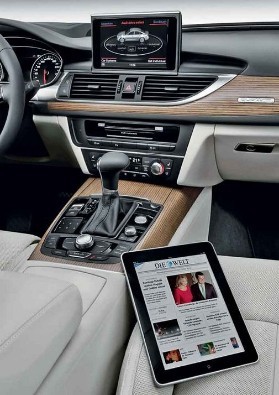
Automatic transmission, one-button door lock and alarm set, built-in GPS navigation, cameras and sensors for maneuvering in tight spots – soon these may seem like standard conveniences compared to new technologies moving into the mainstream this year, according to some auto industry In-Vehicle Infotainment (IVI) experts.
Show original
Tech Savvy Tikes

Every generation gets the spoils of new technologies that their parents were introduced to, and often the new generation seems to have a natural inclination for using new things, whether it was the advent of the automobile, to TV, telephones, computers and today with mobile gadgets like smartphones and tablets.
What I noticed was that many parents were sharing their “precious” and pricy touch screen iPhones and iPads. I used to share my blackberry with my two kids when they were toddlers and later gave them classmate PCs of their own. Even then, I noticed they wanted to mimack me but they were genuinely curious and not affraid to figure out how it worked. I delight at this, not for technology’s sake, but for the eveidence that most people are naturally curious and willing to try.
This sparked an ideas to write an article that my editor dubbed Touch Generation. Rather than talk about technology as a whole — how parents are taking more photos and videos of their kids, creating an online dossie for their kids at an early age — we focused on the ease with which young children took to touchscreen devices. I spoke with a handful of recent parents, people who I saw regularly sharing photos of their children on Facebook and on Twitter.
The issue of screen time is important, and one that most parents seem aware of when sharing their devices with their children. The best common sense advice from most people I spoke with was to “share” this screen time or collaborate with children when they are using technology…and to not spend too much time in front of the screen, but enough to get invovled and explore together.
The story sparked some conversation on Facebook and a few blog posts have been created since we released the story on Intel Free Press, but this topic has been bubbling and bouncing around for a few years now. It’s been interesting to read experiences others are having when they share their touchscreen tech with their toddlers, and how parents are coping with good and bad behaviors as how they feel about any potential harm being caused by allowing young children to use technology.
I’d say — and I practice — don’t make technology a big deal. Show that it’s helpful and useful but that direct contact with people and physical activities are critically important to our bodies and minds. In fact, the rise of “social computing” has best surved me with their is an equal or bigger “social” interaction and relationship that happens in real life — sharing lunch, meeting at events…
I will keep adding her any related stories that I find, and I encourage you to share your experiences parenting the Touch Generation.
Story by Ali Heriyanto of Chip Chick: Are We Raising the Touch Generation
Today’s children are the “Touch Generation” by Ubergizmo
Sascha Pallenberg of NetbookNews.com shared with me video of a panel he lead a while ago where Carmen Villadar of What’s Up Andriod, who talks about how future generations are certainly growing up in a world where they’ll be using touch technologies their whole life (about 19 minutes in).
Repost of Chip Chick and Ubergizmo stories by:
Winemakers and Tech Researchers
This is an excerpt from a video I directed, and shot by one of my all-time favorite news video journalists, Rick Greenwell, back in the summer of 2003. We we’re looking for interesting uses of Wi-Fi, the wireless Internet technology at the time known also as 802.11b. Some pals inside Intel Labs tipped us to the wireless sensor technology research they were doing at Cameron Winery, where Wi-Fi radio chips were built into sensors monitoring temperature, moisture and other things. Part of the vineyard was turned into a wireless hotspot so these sensors could regularly transmit live data from the vineyard to an Internet site where the vineyard owner and researchers could check into conditions and spot any areas that needed care.
This video snippet was featured in a news report about One Unwired Day, a day celebrated across the U.S. in late 2003, when Wi-Fi hotspots were popping up in all kinds of interesting public and private places.
Fast forward to this audio Podcast Future Lab: Measuring Vineyard Yields. I was interested in the back story of this Podcast, where winemakers from Wente Vineyards were using technology but seemed to be somewhat scepticle about using “advanced technologies.”
This Podcast brought to mind my experience years ago with the Intel Lab researchers, and talking with the chief winemaker of Cameron Vineyards. This was the inspiration that led me to explore the role of innovation in vineyards, for grape growers and winemakers. Old wine regions are facing big competition from new wine regions and new winemakers from around the world. Some follow rules, regulations and traditions while others seem more willing to embrace technology as a possible booster to runnign a more efficient vineyard to exploring new winemaking techniques.
Here is an expert from a story I wrote for Intel Free Press, titled Wineries Uncork Advanced Technology.
While many winemakers around the world have been experimenting with new approaches such as chemistry to fine-tune the taste of wine, computer technologies like wireless sensors are being used to control irrigation of some vineyards. Recently, researchers have been putting computer vision technologies to work in vineyards, believing that one day winemakers might even be able to use their mobile phones to actually see and help manage their crops.
Predicting a crop’s yield has long been a common practice among grape growers, but a few, like Wente Vineyards in California, consider it an exact science.
Computer Born of Greek Democracy
According to archaeologists, the birth of the world’s first computer was much closer to the dawn of democracy than to the digital age.
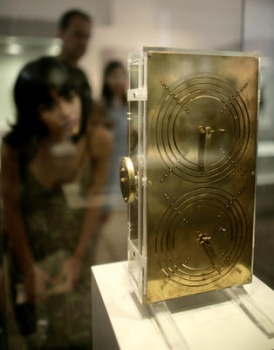
Below is a link to a story I wrote for Intel Free Press looking at some of what’s known about the Antikythera Mechanism, discovered by sponge divers in 1900. It dates to the around 100 BCE, according to scientists studying it over the centuries.
The story was inspired by my archaeologists wife, and features a quote from her UC Berkeley friend and scientist Leonidas Petrakis, a former director at the Department of Energy’s Brookhaven National Laboratory, who recently wrote an article about the device for National Herald, a weekly publication for Greek-American news and culture.
 Movin' Ahead