
– Posted using MobyPicture.com
Now if only I could get my head or iPhone on straight! My MobyPicture posts often come in disoriented, or maybe it’s just me 🙂
– Posted using MobyPicture.com
Now if only I could get my head or iPhone on straight! My MobyPicture posts often come in disoriented, or maybe it’s just me 🙂
Via Scoop.it – Movin’ Ahead
It’s “A Bug’s Life” meets “WALL-E,” except this other-worldly creation is no product of Pixar Animation. It’s the real deal.
Show original
Above is the introduction for story I produced for Intel Free Press. What started out as a short story assignment quickly evolved into a more personal and technical expose of wonderful young engineering student from the University of Arizona, Matt Bunting.
After connecting with Intel Embedded team’s Stewart Christie, I learned that Bunting’s hexapod was appearing on the cover of the Linux Journal and that EE Times was honoring Bunting for prestigious ACES Award, naming him Student of the Year. That’s what brought him to San Jose, where I got to meet him and his mom, who actually helped me while I was shooting the video interview with her son. She even prompted some chuckles and emotional responses from her son while the camera was roling.
The video evolved over a few days of editing, as Christie and Bunting helped me collect photos and video that helped put visuals to Bunting’s words. The story took an artisit turn — blending art and science — when Bunting saw a piano at the Fairmont Hotel, and calmly sat down and dropped into a moody melody that I used at the beginning of the video. That music, mixed with the Spanish guitar music Bunting shared with me, along with sounds from the motor movements of the robot, infused some chilling excitement into the video, a feeling that many people get when they see the hexapod live for the first time.
What an inspiring and kind person. I let Bunting know that my son was moved by the hexapod story so much that now my son wants to be a robot maker. Bunting replied, “It is always wonderful to hear when I have inspired a young mind.”
Now I’m hooked! I’m cheering for Bunting and his University of Arizona research team as they build the Cheetah Project, funded by DARPA, which is an attempt to build a robot that can run as fast as a real four-legged cheetah and eventually a create the world’s fastest two-legged robot.
Here are some photos on Flickr I took with my Canon Rebel X and others collected from Bunting and Christie.
– Posted using MobyPicture.com
Via Scoop.it – Intel Free Press
PORTLAND, Ore.—There were more 1,000 of them from all over the world; Intel researchers and scientists chatting and sharing knowledge and information about transistors, systems, software, validation, voltage, augmented reality, power—and perhaps…
Show original
– Posted using MobyPicture.com
Via Scoop.it – Intel Free Press
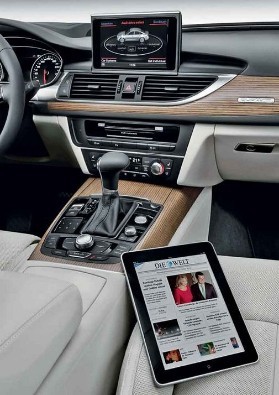
Automatic transmission, one-button door lock and alarm set, built-in GPS navigation, cameras and sensors for maneuvering in tight spots – soon these may seem like standard conveniences compared to new technologies moving into the mainstream this year, according to some auto industry In-Vehicle Infotainment (IVI) experts.
Show original
This is an excerpt from a video I directed, and shot by one of my all-time favorite news video journalists, Rick Greenwell, back in the summer of 2003. We we’re looking for interesting uses of Wi-Fi, the wireless Internet technology at the time known also as 802.11b. Some pals inside Intel Labs tipped us to the wireless sensor technology research they were doing at Cameron Winery, where Wi-Fi radio chips were built into sensors monitoring temperature, moisture and other things. Part of the vineyard was turned into a wireless hotspot so these sensors could regularly transmit live data from the vineyard to an Internet site where the vineyard owner and researchers could check into conditions and spot any areas that needed care.
This video snippet was featured in a news report about One Unwired Day, a day celebrated across the U.S. in late 2003, when Wi-Fi hotspots were popping up in all kinds of interesting public and private places.
Fast forward to this audio Podcast Future Lab: Measuring Vineyard Yields. I was interested in the back story of this Podcast, where winemakers from Wente Vineyards were using technology but seemed to be somewhat scepticle about using “advanced technologies.”
This Podcast brought to mind my experience years ago with the Intel Lab researchers, and talking with the chief winemaker of Cameron Vineyards. This was the inspiration that led me to explore the role of innovation in vineyards, for grape growers and winemakers. Old wine regions are facing big competition from new wine regions and new winemakers from around the world. Some follow rules, regulations and traditions while others seem more willing to embrace technology as a possible booster to runnign a more efficient vineyard to exploring new winemaking techniques.
Here is an expert from a story I wrote for Intel Free Press, titled Wineries Uncork Advanced Technology.
While many winemakers around the world have been experimenting with new approaches such as chemistry to fine-tune the taste of wine, computer technologies like wireless sensors are being used to control irrigation of some vineyards. Recently, researchers have been putting computer vision technologies to work in vineyards, believing that one day winemakers might even be able to use their mobile phones to actually see and help manage their crops.
Predicting a crop’s yield has long been a common practice among grape growers, but a few, like Wente Vineyards in California, consider it an exact science.
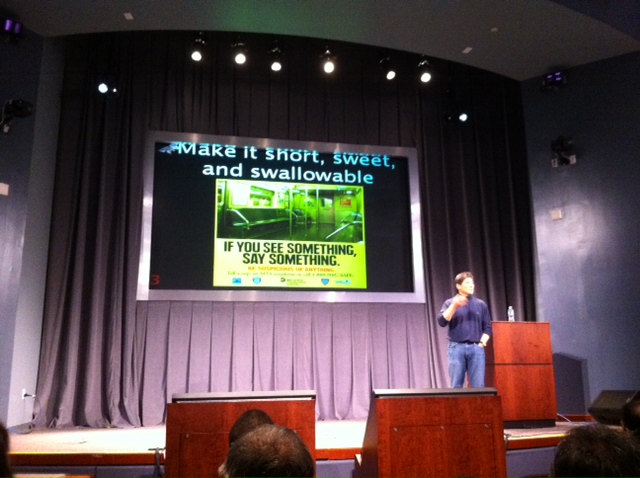
– Posted using MobyPicture.com


 Movin' Ahead