CNBC Shares Video on Web Before Airing on Cable

Impressive to see NBC go all out at CES — a huge presence! A whole booth devoted to broadcast live NBC and CNBC shows, and using their Website all the while. They became the story for many media watchers and social media buzzhounds.

Today Intel’s new CFO Stacy Smith did his first TV interviews explaining the company’s quarterly earnings. Record revenues but Wall Street had its way.

It’s interesting to see how Jim Goldman’s one-on-one interview with Stacy was released first on the Web. Much of it has to do with the timing — Intel announces earnings after the bell, making it difficult to feature the live interview in a show. So why hold the interview to air first the next morning in its entirety on cable? The value of web video audiences is gaining more ground, nipping on the heals of how media bosses value of broadcast audiences.

It’d be great if CNBC would let me copy and embed their videos into my blog.  Coming soon?

Digg Button Opens Gated Wall Street Journal News Site

Significant things happening almost every week: Microsoft invests mightily in Facebook, Google OpenSocial unlocks new social computing possibilities and now I see that stories the Wall Street Journal Website now have the Digg button, allowing all of us former WSJ subscribers another chance to read stories relevant to us on our terms.

DiggDiggDigg

Wow! What’s next?

Here’s what CNET’s The Social blog by Caroline McCarthy thinks:

But more than anything, it’s also fuel for the fire. Digg has been continually talked up as a potential acquisition target, and in recent weeks a rumor began to float that the site would soon be sold for $300-400 million to a “major media player.” Expect this Wall Street Journal arrangement to result in more than a few rumors that Digg is close to a News Corp. buy.

Topix.com Helping News Outlets Get Their Audiences Commenting

Topix.com is interesting to watch, learn about and mess with…even if you live in San Francisco, which like most biger American cities doesn’t have many local Topix.com users. But it is makeing a big impact in helping other, smaller cities across the U.S. to get their readers chatting and participating online. This is helping mainstream media companies to step into the online participation generation.

I got to meet Topix.com CEO Chris Tolles at the Social Media Club in San Francisco in August. I sat in front of him and the two other panelists — Evan Hansen of Editor in Chief of Wired News & Assignment Zero and Kevin Rose of Digg.com.

Chris has a great perspective — honesty with an edge. He even stopped to talk with me and Tom Foremski outside KQED studios and asked about what we were up to. Like a good salesman, he left us with an assignment to sign up as an editor on the Intel channel. Cool and savvy!

See Chris interviewed by Andy Plesser on Beet.TV:

There’s been a lot of concern among major media that this constitutes a further cannibalization of original reporting by search engines and content aggregators.

Brad interviews Topix.com CEO Chris Tolles.

Topix generates more that 60,000 comments a day from news. Many of these comments are generated around local stories and are syndicated to local newspapers and local news web sites. About a third of the comments generated every day go to sites owned by the Tribune and Gannett newspaper chains. So, maybe this is one link in the food chain where aggregated news can feed the original content creator.

Here’s my interview with Chris Tolles of Topix. We caught at Stanford earlier this month at the AlwaysOn conference.

— Andy Plesser

Here’s a link to a video by PodTech’s Rio Pesino, who talks with some interesting Bay Area news lovers, haters and players

New Rules of Marketing & PR

David Meerman Scott talks with Jennifer Jones of Marketing Voices about his new book The New Rules of Marketing and PR. Engagement of a community, and having good content are key to success in this new environment.PR is focusing more on public relations rather than media relations these days, but the meaning of Public and Media are both important and ever changing.   It’s really about building and maintaining meaningful relationships.

There are lots of new rules out there, and this book hits an important moving target.

[podtech content=http://media1.podtech.net/media/2007/07/PID_011910/Podtech_Marketing_Voices_David_Meerman.mp3&postURL=http://www.podtech.net/home/3639/what-it-takes-to-make-it-in-pr-and-marketing-today            &totalTime=754000&breadcrumb=096e0d54bd474222a7446ff21b14a60f]

Demo of sharing service AllPeers

Sharing is at the core of social media, an essential part of any strategy or any tool/application. Not only for consumers — AllPeers’ target — but also for any communication. Give and be prepared to keep giving, especially if your followers’ interest deepens over time. Here’s Robert Scoble getting a demo with AllPeers’ CTO Matthew Gertner.

[podtech content=http://media1.podtech.net/media/2007/07/PID_011869/Podtech_SuperNova_AllPeers_demo.flv&postURL=http://www.podtech.net/home/3571/demo-of-sharing-service-allpeers&totalTime=413000&breadcrumb=4af977d006854f21b056afa3a81dead5]

Veoh is My New Favorite Video Site

Here’s an interview with the CEO of Veoh from Beet.TV This is quickly becoming my favorite video site. Love the quality of the video and the ability to publish once and syndicate to several other video site accounts (Google, YouTube) plus this blog. I’m still learning the ropes. In fact, I embedded their widget and it’s not quite working right…yet.

PodTech-Silicon Valley Watcher: Harry McCracken

Tom Foresmki, seasoned super pioneering tech journalist, has been one of the best to listen to and watch move from mainstream to new media…I’d say he’s really helping move mainstream to become new mass media.

At the core of everything I’ve been learning from Tom is integrity, which is the subject in this video interview with Harry McCracken, editor-in-chief of PC World.

[podtech content=http://media1.podtech.net/media/2007/06/PID_011635/Podtech_SiliconValleyWatcher_Harry_McC.flv&postURL=http://www.podtech.net/home/3348/silicon-valley-watcher-harry-mccracken&totalTime=106000&breadcrumb=d1a34b849ef044158d1cc159da1b6385]

Newspapers Won’t Die, But Will Bleed Before They Lead

Andy Kessler in today’s Wall Street Journal wrote A Future For Newspapers.  I first read Doc Searl’s post, where he also offered the whole thing on (Andy’s) his blog.

Doc liked a lot of what Andy says, and added a few additional things newspapers ought to do: the ten I listed here in March along with what Dave Winer added.  But I wonder what Tom Foremski would say.  It seems like newspapers could also address cutting the high costs of producing newspapers.  The treat I liked was finding a bonus link to a new interesting book with a crazy long title:  “The News Fix: Ink-stained Wretches and Digital Rabble Rousers Reviving American Media” by Will Bunch.

Diving deeper into Andy’s story and the afterbuzz in the blogospher is what I’m looking forward to.  I’m wondering if we’re seeing more dollars being spent because traditional media seems top of mind and still very important, but the online buzz is huge and can’t be ignored.  A new media company said to me two years ago that over time money would systematically be skimmed from traditional advertizing and moved new media efforts.  I’m not sure if there’s any skimming going on.  I think marketing dollars are going towards online, adding to the overall advertizing budgets.

Exploring Media Myths Uncovers Sound Advice

A communications pro pointed me to a 2006 media research paper by Ketchum.  You can get more details inside the slideshare document, but here are a few paragraphs I liked best:

ROCKLAND:  What do you consider the best practices for affecting word of mouth through public relations?

MARGARITIS:  Focus on cultivating emotional appeal — trust, admiration and respect — and build reputation capital — your workplace and culture, reputation, stewardship, the quality of your products and services, and your integrity and ethics.  Your corporate character and value system must take on a more prominent role in storytelling, but it also must be authentic.  Find credible ways to get stories out that showcase all of these characteristics, and they should include local stories.  It’s about focusing within your organization on cultivating service, and it serves as a way to earning your way to the word-of-mouth channel.

ROCKALND:  This probably is the hardest question facing public relations practitioners.  We know that influencers generate a great deal of word of mouth.  However, not everyone is an influencer, and all conversations are not started by influencers.  Maybe it comes back to basics, a good messenger with a “sticky” message at the right time in the right place.

ROCKLAND: How would you advise a company about its media communications as a result of this study’s findings?

MAFFEO:  Deploy more personalized communications through diverse communications through diverse communications channels and platforms that effectively communicate your message among target audiences and in a way that best suits the audience and the medium.

SCIBETTA:  Develop a highly customized and fragmented media mix.  The intersection of new media, traditional media and the human element is the key for creating effective and strategic media relations.  It enables companies to engage with consumers while also providing surround sound for their messaging.

SWERLING:  Media is not one-size-fits-all.  That’s the easy answer.  People use different, multi-channel models when considering different types of purchases and issues.  And those models are changing at lightening speed as new, technology-based resources become available.  As a result, communications must have a thorough understanding of their audiences, and they must stay very current with the media being used by those audiences.  The harder answer is that everyone in our own profession needs to be thinking about constantly reinventing what we do.  Ours always has been a mass-media-centric business that has focused on building relationships.  That models now must accommodate these new and emerging channels.  And if communicators don’t build relationships with them, they do so at the risk of their organizations and their  career.

Moore’s Law Got Me

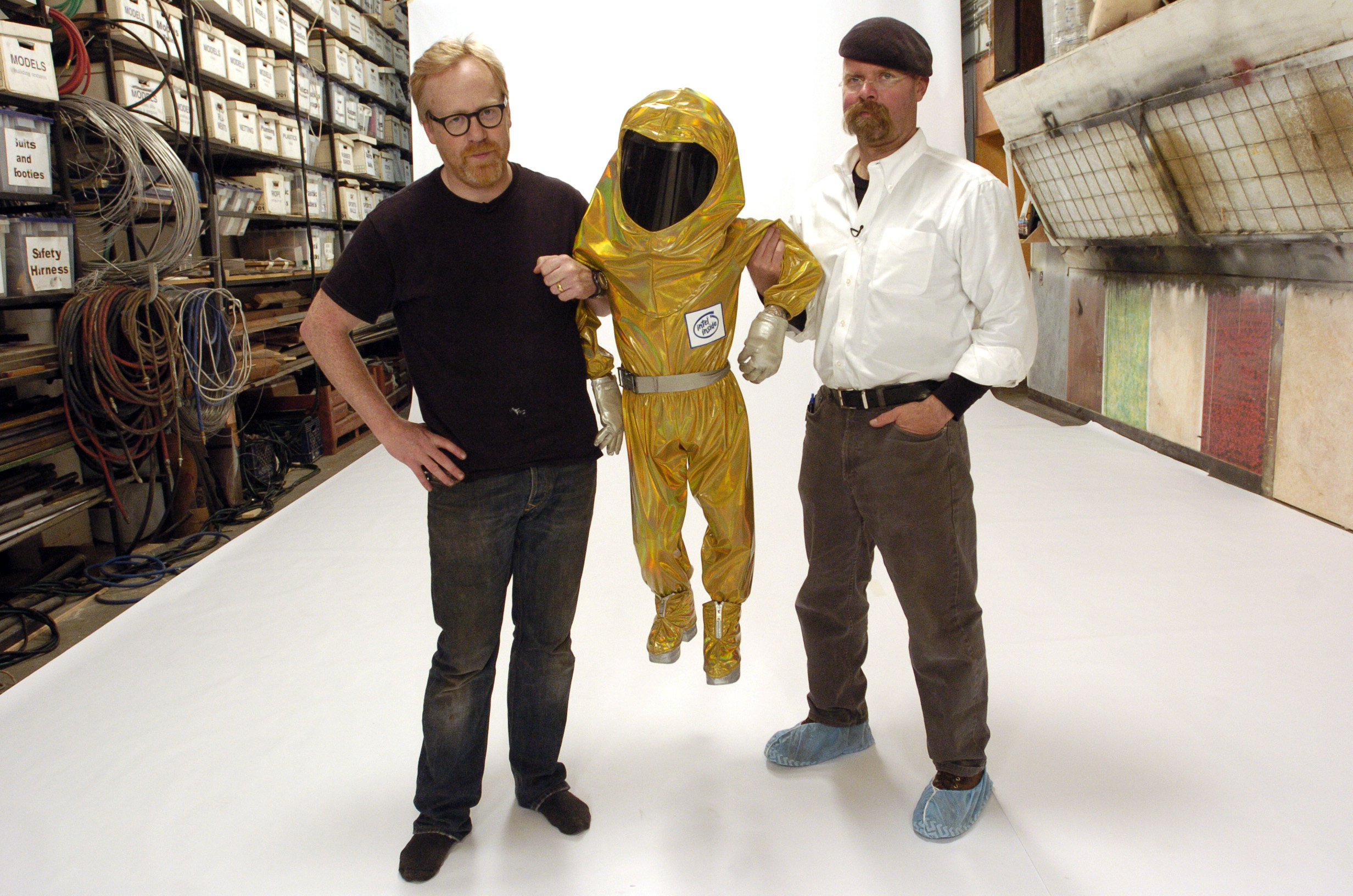
Adam Savage, Intel Bunnyman & Jamie Hyneman

In late April, we got the chance to work with Adam Savage and Jamie Hyneman and with the great San Francisco production company, Carl’s Fine Films to create three short videos.  Shot in HD at the M5 Shop/Studios, this was pulled together in start to finish in about three weeks.  The wonder and wit of Adam and Jamie mixed with the genius of director Carl Willat was full throttle all the way through today.  Embedded videos coming soon.